
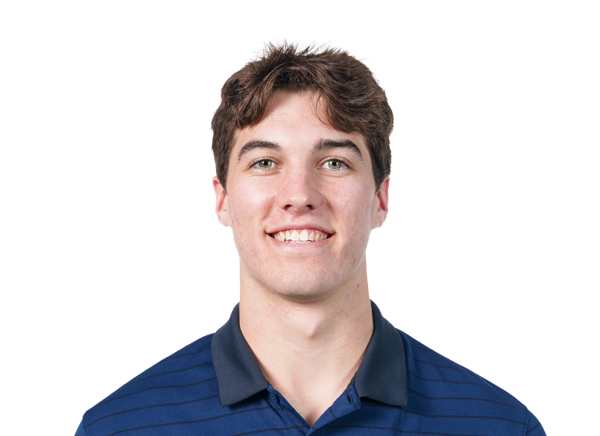
Rhys Brush
 Auburn
Freshman
Auburn
Freshman
Bio
Recruiting
Scouting Report
Rhys Brush is a 3-star Quarterback from Seffner, FL (Armwood) in the 2026 class. Ranked No. 1474 nationally, No. 70 at QB, No. 92 in FL. Composite rating: 0.8622. Committed to Auburn University since December 2, 2025.
Physical Profile
Listed at 6-2, 180 lbs. Taller than 31% and heavier than 9% of 2026 Quarterback prospects in the SEC Scouts database (128 with a listed size).
Play Style
A rhythm-and-timing point guard. Brush wins from the pocket by working through quick-game and RPO reads, keeping his eyes downfield under pressure, and taking what the defense gives him rather than chasing explosive plays. His touchdown-to-interception ratio and efficiency show a conservative, mistake-averse decision-maker who throws on schedule. When the play breaks down he scrambles to pick up yards or buy time rather than improvising wildly, and he uses designed QB runs as a complement rather than as his identity. In short, he is a distributor who runs the system well and protects the ball, not a high-volume gunslinger.
Strengths
- Ball security: 61 TDs to 4 INTs across his junior and senior seasons, and 24 TDs to 2 INTs as a senior before the state semifinals. That points to disciplined reads and a refusal to force throws into coverage.
- Pocket toughness: evaluators keep pointing to film of him standing in against pressure and delivering on time, which is the trait that carries over most reliably for under-recruited pocket passers.
- Experience against high-level competition: a three-year starter (23 TDs as a sophomore, 1,640 yards on 108 completions) for an Armwood program that regularly makes deep Florida playoff runs against FBS-heavy rosters.
- Scheme continuity: Golesh recruited him to USF, so he arrives at Auburn already knowing the offensive vocabulary, tempo and progression structure. That shortens his learning curve compared with a typical freshman.
- Enough mobility to keep plays alive: 442 rushing yards and 9 rushing TDs in 2025 show he can punish defenses that drop eight or lose contain.
Areas to Improve
- Volume and vertical stress: his yardage (about 1,650-1,700 per season) is modest for a three-year starter, partly because of Armwood's run-heavy, frequently lopsided games. He has to show he can push the ball outside the numbers and down the field at SEC throwing volume.
- Strength and durability: at 195 pounds he needs a full year in the weight room to absorb SEC hits and drive the ball through tight windows late in games.
- Processing at SEC speed: his low interception count came against high school coverage. He needs reps against disguised rotations and pattern-matching coverage to show his decision-making holds up.
- Arm talent questions: his #70-80 QB national ranking reflects evaluator doubts about his top-end velocity. Improving his lower-body mechanics will help him find more arm strength.
College Projection
He is a freshman in 2026 behind senior starter Byrum Brown, who also followed Golesh from USF. A redshirt year, using the four-game rule, is the likely path while he builds strength and learns the system. Brown leaves after 2026, which makes the 2027 QB room the real opportunity. Brush has a realistic shot at QB2 in 2027 and could compete for the job in 2028 if his arm strength and frame develop. Auburn will almost certainly add transfer-portal quarterbacks, so his ceiling depends on how much he develops physically by his redshirt-freshman spring. A realistic outcome is a multi-year backup with spot-start ability; the upside is a game-managing SEC starter in the Golesh system.
Best Fit
An up-tempo, spread RPO offense built on quick decisions, pre-snap reads and ball security, which is exactly what Golesh runs. Brush's value goes up in a system that asks the quarterback to distribute efficiently and use his legs occasionally, and goes down in a pro-style, drop-back offense that relies on deep-field velocity. Auburn under Golesh is close to an ideal landing spot because the scheme familiarity offsets his raw-tool limitations.
Current Team
Auburn University