
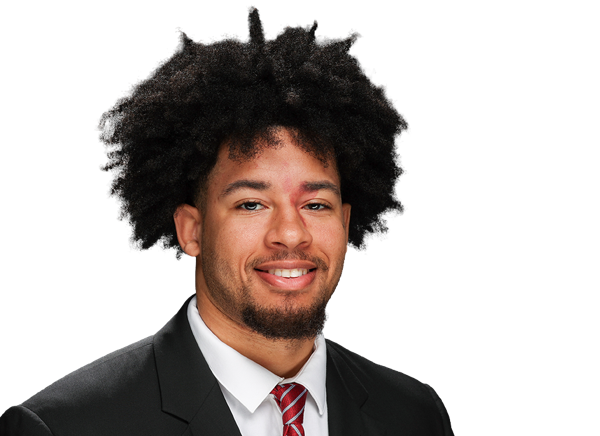
Corey Howard
 Alabama
Freshman
Alabama
Freshman
Bio
Recruiting
Scouting Report
Corey Howard is a 3-star Edge Rusher from Valdosta, GA (Valdosta) in the 2026 class. Ranked No. 608 nationally, No. 85 at EDGE, No. 81 in GA. Composite rating: 0.8844. Committed to University of Alabama since October 18, 2025.
Physical Profile
Listed at 6-6, 245 lbs. Taller than 95% and heavier than 79% of 2026 Edge Rusher prospects in the SEC Scouts database (169 with a listed size).
Play Style
On film and in coaches' descriptions, Howard is a length-first lineman who usually lined up on the edge or over the tackle at Valdosta. He gets off the ball well for his size, extends his arms to control the blocker's chest, and finishes from the backside thanks to his range. His hand use was noticeably better as a senior; Felton singled out knockback and block shedding as recent gains. He plays more as a reactor than a penetrator: he controls a gap, reads the play, then disengages. He is not yet a gap-shooting 3-tech. He projects best where his length can set the edge against the run, with pass-rush wins coming from stunts and long-arm power rather than pure speed.
Strengths
- Length and frame: a 6-6 build with long arms lets him keep blockers off his body, see the backfield, and bat passes. He can play 5-tech, 4i or 3-tech, which is how Valdosta coach Shelton Felton described his fits.
- Production in a top Georgia program: over two seasons at Valdosta he had roughly 86 tackles, 25 TFL, 12 sacks and 17 hurries (247's October 2025 numbers; an earlier SI count was 64 tackles, 16 TFL, 7.5 sacks). That is steady disruption against Georgia's highest classifications.
- Improving hand use: Felton said in 2025 that Howard was 'playing with his hands' and 'generating knockback,' and was learning to shed blocks instead of just running past them. That is the most important skill for a long lineman moving inside.
- Athletic for his size: evaluators who saw him at 245 credited his get-off and his ability to dip around blockers. If he keeps even part of that at 285-290, he becomes a mismatch on twists and stunts against guards.
- Seen as an upside bet by top programs: Georgia held his commitment for four months and Alabama spent an official visit and its staff's push to flip him. That says the people with the best evaluations rate his ceiling higher than his 3-star ranking.
Areas to Improve
- Pad level and leverage: tall linemen get stood up by lower, squatter guards. He has to win with his first two steps from a three-point stance, or his length won't matter in the run game.
- Strength and anchor at his new weight: going from about 245 to 288 within a year means college strength work has to turn that mass into usable power. Holding up against double teams is the biggest gap between him and SEC snaps inside.
- Pass-rush plan: his high school sacks came largely from length and athleticism. He needs a set primary move (long-arm or club-rip), a counter, and a feel for when to use them against college tackles and guards.
- Consistent effort and conditioning at the heavier weight, especially rushing from the interior, where every snap is contact.
College Projection
This is a redshirt-and-develop prospect. Alabama listed him as a defensive lineman, not EDGE, on its 2026 roster. He was not on the Tide's early-September depth chart, and outside trackers have him as a fifth-string nose/interior option. Expect the four games a redshirt allows, plus scout-team and special-teams work (his length suits field-goal block units), in 2026. Year 2 (2027) is a realistic target for a rotational 4i/5-tech role, likely on early downs and in the run game. The middle-case outcome is a multi-year starter at defensive end in an odd front or at a big 4i spot by 2028. The downside risk is ending up stuck between positions: too big for EDGE, not stout enough inside. That would make him a transfer-portal candidate after year two or three.
Best Fit
He fits best in a multiple or odd front that values long 4i/5-tech ends who can two-gap and set the edge, with a strong strength-and-conditioning program to manage his weight. Alabama's current defense and strength staff are a reasonable match. His ideal path is two years of development before significant snaps. A one-gap, penetrate-first scheme that asks him to shoot gaps as an undersized-leverage 3-tech would fit his body type less well.
Current Team
University of Alabama