
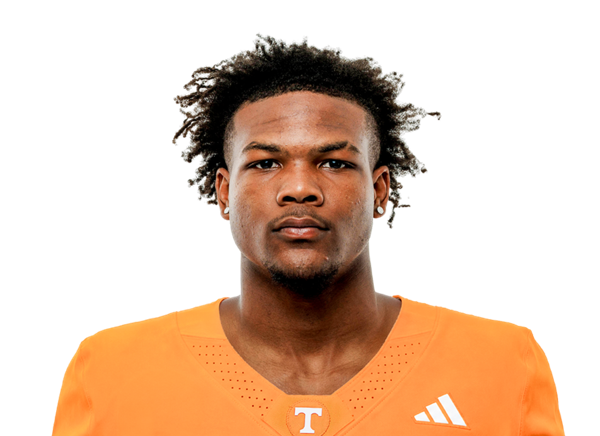
TK Keys
 Tennessee
Freshman
Tennessee
Freshman
Bio
Recruiting
Scouting Report
TK Keys is a 5-star Wide Receiver from Hattiesburg, MS (Hattiesburg) in the 2026 class. Ranked No. 13 nationally. Composite rating: 0.9933. Committed to University of Tennessee since August 5, 2026.
Physical Profile
Listed at 6-2, 198 lbs. Taller than 58% and heavier than 86% of 2026 Wide Receiver prospects in the SEC Scouts database (329 with a listed size).
Play Style
Keys is a long-limbed perimeter 'X' receiver who does his best work downfield and at the catch point. He tracks the ball well, times his jump late and uses his body to box out defenders, so throws that look covered become completions for him. He is a real vertical threat on go routes, fades and back-shoulder throws, and his 22-yard-per-catch junior season shows he's more than a possession target. He has enough body control and ball skills after the catch to work deep crossers, posts and slants, so he can threaten all three levels. He plays with obvious competitive edge and finishes plays through contact.
Strengths
- Winning contested catches: he has excellent jump timing, awareness of where he is on the field and the ability to shield defenders with his body. 247's Andrew Ivins singled out his catch-point skills, and his long limbs let him beat the jam and win above the rim.
- Big-play production: as a junior he caught 58 passes for 1,275 yards (22.0 yards per catch) and 14 TDs and helped Hattiesburg reach the 6A state title game. That is a big-play rate, not a volume-short-route profile.
- Body control and route versatility: he can adjust to off-target throws, work the sideline and run routes at all three levels, which is why 247 compares him to CeeDee Lamb.
- Competitiveness and preparation: Tennessee WR coach Kelsey Pope said that from a readiness and preparation standpoint he has been 'as good of a freshman as I've been around,' citing his early arrivals and extra film study.
- Early readiness: he enrolled in January, and in his debut vs. Furman (9/5/2026) he caught 2 passes for 29 yards, including a 22-yard TD.
Areas to Improve
- Play strength: his frame near 195 lbs needs more muscle to win through press coverage, finish contested catches against physical SEC defensive backs and hold up as a blocker in the run game.
- Health and durability: a knee injury limited his senior season to 22 catches for 436 yards and 5 TDs (four regular-season games plus the state title game) and slowed his spring. Getting back his full burst and change of direction, and managing his workload, are the key near-term variables.
- Separation without contact: his top speed is very good rather than elite, so he'll need sharper breaks, tempo changes and release plans to create space underneath and on option routes rather than relying on 50-50 balls.
College Projection
He is contributing as a true freshman in 2026 and has already scored a TD in the opener. Expect a rotational-to-significant role in Year 1 while Tennessee manages his knee and workload, used mostly as a boundary target on vertical routes, in the red zone and on third down. With a normal strength-and-conditioning jump and full health, he projects as a starting X receiver and the offense's primary target by Year 2 (2027). His ceiling is All-SEC.
NFL Outlook
He has first-round upside. His size, catch radius, body control and competitive profile fit the NFL boundary No. 1 receiver template, and 247 explicitly projects early-round NFL Draft potential. He becomes draft-eligible after the 2028 season. How high he goes depends on adding mass without losing burst, showing his knee is fully recovered and proving he can separate against press-man coverage from pro-caliber corners, not just win 50-50 balls.
Best Fit
A vertical, spread passing offense that isolates a big boundary receiver in one-on-one coverage and throws the ball down the field. Tennessee's up-tempo, wide-split system under Josh Heupel (Joey Halzle is the OC) is an ideal match: its extreme splits create space for back-shoulder and go-ball chances, and its history of producing big-play receivers fits his skill set. He'd also fit any pro-style or spread scheme with a quarterback willing to throw into tight windows and let him make contested catches.
Player Comparison
Both are highly-rated prospects from the Southeast who committed to Tennessee with similar physical frames (6'2"-6'3", 190-200 lbs). Barnett was also a top-40 national recruit who dominated at the state level before becoming a consistent, technically sound performer at Tennessee, suggesting similar talent evaluation and development trajectory.
Current Team
University of Tennessee