
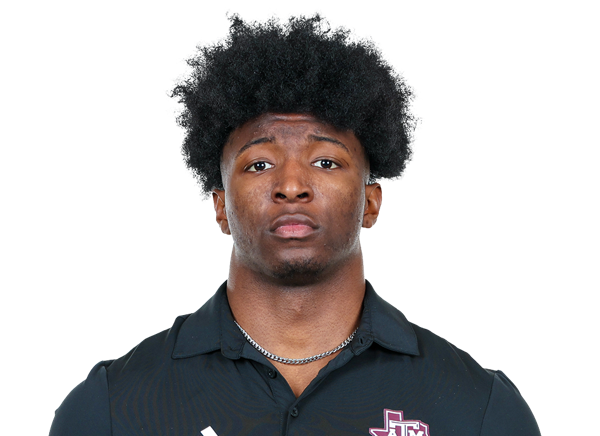
Qui Beck
 Texas A&M
Freshman
Texas A&M
Freshman
Bio
Recruiting
Scouting Report
Qui Beck is a 4-star Linebacker from Carthage, TX (Carthage) in the 2026 class. Ranked No. 361 nationally. Composite rating: 0.8996. Committed to Texas A&M University since July 26, 2026.
Physical Profile
Listed at 6-0, 228 lbs. Taller than 4% and heavier than 91% of 2026 Linebacker prospects in the SEC Scouts database (207 with a listed size).
Play Style
Beck is an attacking, in-the-box linebacker who plays best going forward. On film he diagnoses quickly, runs downhill with no wasted steps and strikes ball carriers with real pop. He plays with a low center of gravity and good pad level, which lets him take on lead blockers and fill a gap rather than dance around it. Carthage also used him as a stand-up edge rusher, where his short-area burst produced pressures and TFLs. In the backfield he is a finisher. He is more comfortable as a run defender and blitzer than as a space defender in coverage, which is the classic profile of a Texas 4A linebacker who dominated at the point of attack.
Strengths
- Productive and consistent: about 300 tackles, 34 TFL, 13 sacks, 35 pressures, 10 PBUs, 5 fumble recoveries and 3 defensive TDs over his last three seasons, including 102 tackles, 21 TFL, 5 sacks and 2 defensive TDs as a junior
- Big-game performer: Defensive MVP of the 2024 4A D-II state championship with 10 tackles, 3.5 TFL and a sack against Waco La Vega
- Hits with force: arrives as a striker, gets downhill quickly on run fits and finishes with his hips rather than arm tackles
- Moves well in both directions: flows forward and laterally, scraping over the top to beat backs to the alley
- Can pressure the passer: Carthage lined him up at a two-point edge spot in 2024, which makes him a credible blitzer and simulated-pressure piece in Jay Bateman's scheme
- Comes from a winning program: Carthage went 57-2 during his four years under Scott Surratt, with multiple state titles, so he arrives used to high-level coaching and big games
Areas to Improve
- Coverage: at high school level he was mostly used attacking downhill and as a pressure player. He needs work on zone drops, pattern matching and carrying the seam against SEC tight ends and backs
- Shedding blocks: without much length, he has to win with quick, violent hands and leverage before guards get into his chest. Consistent block destruction is his biggest jump
- Processing speed: reading run-pass keys, handling motion and shifts, and making front checks at SEC speed takes a year or more of reps for most freshmen linebackers
- Special teams: his first playing time will likely come on coverage units, so he needs to learn the angles and discipline those units demand
College Projection
He enrolled early and is a true freshman in 2026. He sits behind established linebackers including Taurean York, Daymion Sanford and Jordan Lockhart, and competes with classmate Storm Miller. The most likely path for 2026 is a special-teams role plus spot duty, possibly finishing as a redshirt under the four-game rule. As of late September 2026 there were no verified defensive stats. A realistic timeline is rotational snaps in 2027 and a push for a starting MIKE or WILL job in 2028, once York's class moves on. If his coverage skills develop, he can be a multi-year starter with three-down value. If not, he projects as a high-end early-downs linebacker and core special-teams player.
NFL Outlook
247's evaluation projects him as a Day 3 pick (rounds 4-7) and compares him to Bradley Shaw (Arkansas). The traits that translate are play strength, striking ability, blitz production and special-teams value. His below-average length and unproven coverage are what cap his ceiling. To get into the Day 2 conversation he has to show he can play three downs: covering backs and tight ends man-to-man and staying clean at the second level. A strong combine in the 40 and shuttle would also help offset his height and length.
Best Fit
An aggressive, multiple 4-3 or 4-2-5 defense that uses its linebackers as downhill run-fitters and pressure players. Texas A&M under Mike Elko and DC Jay Bateman, whose defense leans heavily on simulated pressures and linebacker blitzes, fits him close to ideally. He is best at MIKE or WILL behind a front that keeps guards off him, with a clear run-fit assignment and chances to attack the line. He would be a weaker fit in a scheme that asks its linebackers to carry vertical routes and spend a lot of snaps in space.
Current Team
Texas A&M University