
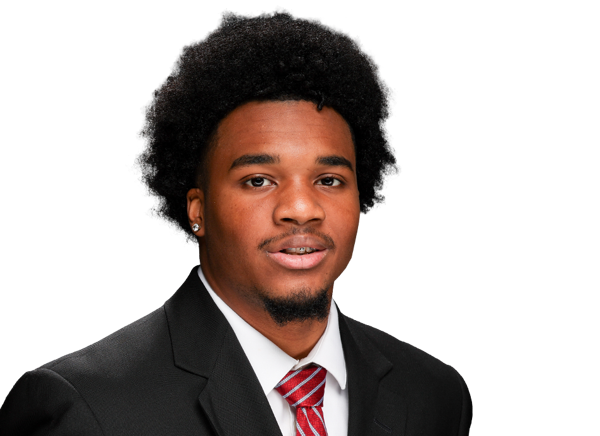
Maurice Mathis
 Alabama
Freshman
Alabama
Freshman
Bio
Recruiting
Scouting Report
Maurice Mathis is a 3-star Wide Receiver from Warner Robins, GA (Houston County) in the 2026 class. Ranked No. 508 nationally, No. 49 at WR, No. 38 in GA. Composite rating: 0.8889. Committed to University of Alabama since January 17, 2026.
Physical Profile
Listed at 6-1, 180 lbs. Taller than 43% and heavier than 44% of 2026 Wide Receiver prospects in the SEC Scouts database (329 with a listed size).
Play Style
A smooth, rhythm-based receiver who wins with tempo, leverage and deceptive breaks instead of pure speed. At Houston County he was the No. 1 target, used vertically and on intermediate breaking routes, where he sets up defensive backs before cutting and separates late. After the catch he's slippery rather than powerful, making defenders miss in space instead of running through tackles. His ability to produce big plays as the focus of opposing defenses (16 TDs as a senior) shows reliable hands and good ball tracking downfield.
Strengths
- Big-play production that grew over two years: 2,232 receiving yards and 27 TDs over his junior and senior seasons, with his yards per catch rising from 16.0 to 19.5 as a senior. He finished downfield instead of just piling up volume on short throws.
- Route craft: evaluators at the time of his offer called him a 'deceptive route runner who flashes the ability to create separation at the top of routes.' He wins with tempo and his stems more than with raw speed, which is the trait most likely to transfer to college.
- Elusive after the catch: he makes the first defender miss and turns intermediate catches into explosives. That makes him usable on quick game, screens and over-routes early in his career.
- Offensive versatility: he threw a 20-yard TD pass as a senior. It's a small sample, but it suggests he could be used on trick plays and has a feel for the ball.
- Signed and enrolled early, so he got spring practice and a summer of strength work with Alabama's staff before his first fall camp.
Areas to Improve
- Play strength and the release package: at 180 he has to add mass and develop hand-fighting and press-release counters. Physical SEC corners will reroute and disrupt him at the line until he does.
- Quality of competition and verified athleticism: he was a late, low-profile recruit who was committed to an FCS program until January of his senior year. His production came against Georgia high school competition with no national testing data, so he still has to show his separation holds up against high-end athletes.
- Blocking and contested catches: with a lean frame he needs to improve stalk/crack blocking and catching through contact in tight windows. Both are requirements for getting snaps in Alabama's receiver rotation.
College Projection
He's a developmental depth piece in 2026, when he was reportedly Alabama's eighth scholarship receiver. The realistic path is special teams and a possible redshirt year (he can play up to four games and keep it) while he adds mass. He could compete for rotational snaps as a flex or Z receiver in 2027. A starting role is a third-year (2028) outcome if his strength gains and route craft translate. His flip in a thin receiver room after transfer-portal losses shows the staff (WR coach Derrick Nix) valued his route-running enough to take him late, but he starts behind higher-rated signees and portal additions.
Best Fit
A pro-style or spread offense that puts a premium on route precision and timing, with option routes, choice routes and intermediate in-breakers, where a deceptive route runner can win without elite size or long speed. Alabama's staff took him for that profile. Long term he fits best as a flex/Z receiver who can move into the slot, not as a boundary X receiver who has to beat press every snap. A strength program that can add mass without costing him quickness is the key to his development.
Current Team
University of Alabama