
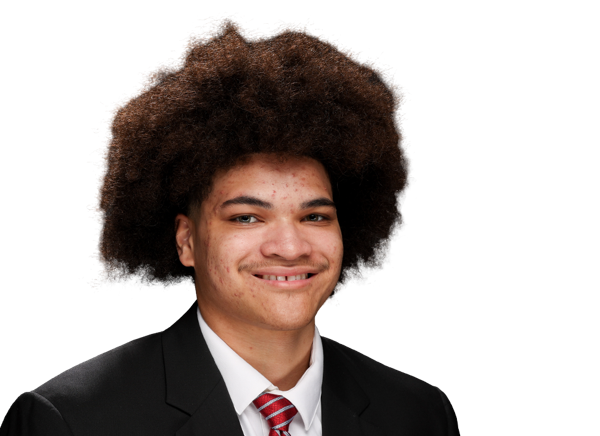
Rihyael Kelley
 Alabama
Freshman
Alabama
Freshman
Bio
Recruiting
Scouting Report
Rihyael Kelley is a 3-star Safety from Cincinnati, OH (Winton Woods) in the 2026 class. Ranked No. 527 nationally, No. 52 at S, No. 46 in OH. Composite rating: 0.8878. Committed to University of Alabama since June 22, 2025.
Physical Profile
Listed at 6-3, 180 lbs. Taller than 90% and heavier than 27% of 2026 Safety prospects in the SEC Scouts database (200 with a listed size).
Play Style
He is a range-first deep safety. He reads the quarterback from depth, uses his long strides to close on throws outside the hashes, and attacks the ball at its highest point instead of just knocking it down. When he comes downhill he arrives with force, which fits his hard-hitter reputation, but he takes on fewer run-support snaps than a true box safety. His best film comes from playing in the middle of the field and reading plays in front of him. The fumble-return touchdown and the interceptions show he can create turnovers.
Strengths
- Length and coverage range: on film, his 6-3 frame and long strides let him cover a lot of ground from a deep alignment. Recruiting coverage repeatedly mentions his 'extremely wide range of coverage', which suits single-high and split-field safety duties.
- Ball skills: he calls himself a ball hawk, and the production backs it up. In the season before his commitment he had 2 interceptions and a fumble-return touchdown on a Winton Woods team that consistently plays a strong schedule.
- Versatility: Alabama coaches Kane Wommack and Maurice Linguist recruited him to play either corner or safety. That gives the staff options for using him in dime packages or as a big nickel against tight ends and big slot receivers.
- Physical edge: evaluators describe him as a hard hitter who is willing to come downhill. That is not always true of tall, rangy coverage safeties, and it gives him a starting point for run support.
- Strong program background: Winton Woods (10-2 in 2025) is one of the better programs in southwest Ohio and has produced other Tide defensive backs (Justin Hill, Cam Calhoun). He has been coached and tested against good competition.
Areas to Improve
- Strength and mass: he needs to get from roughly 185 lb to the 200-205 lb range and keep it there. At his current weight he is likely to struggle taking on pulling guards and finishing tackles against SEC running backs.
- Tackle volume and run fits: 23 tackles is low for a safety and suggests he was not often the primary run defender. He needs to tighten his angles and his alley fits, and to break down cleanly in space, before Alabama can trust him in the box.
- Change of direction: tall defensive backs often struggle with quick in-and-out routes from shifty slot receivers. If he plays corner or nickel, getting his hips lower and quicker in transition will decide how well he does there.
- Learning the defense: Alabama's coverage system is complicated and changes calls before the snap. A three-star prospect from a run-heavy high school setup will need time to learn the communication and rotation rules.
College Projection
Expect a redshirt-style first year in 2026, with work on scout team and special teams while he adds weight. Coverage units (kickoff, punt) are his most realistic early path to playing time, and his length makes him useful as a gunner or a coverage player in the middle of the field. By 2027-2028 he projects as a rotational safety or a dime/big-nickel specialist in passing-down packages. Whether he becomes a multi-year starter depends almost entirely on how well he adds weight and how quickly he learns the defense. If both go well, he has a believable path to starting by his third or fourth year. If not, he is a long-term special-teams contributor or a likely transfer candidate.
Best Fit
Two-high and split-field coverage schemes that value tall, rangy safeties, plus defenses that use big-nickel or dime packages where a 6-3 defensive back can match up with tight ends. Alabama under Wommack fits him well because the staff recruited him specifically for his length and his corner/safety flexibility. He would be a poor fit for a defense that wants its safeties to play in the box against the run from the first snap.
Current Team
University of Alabama