
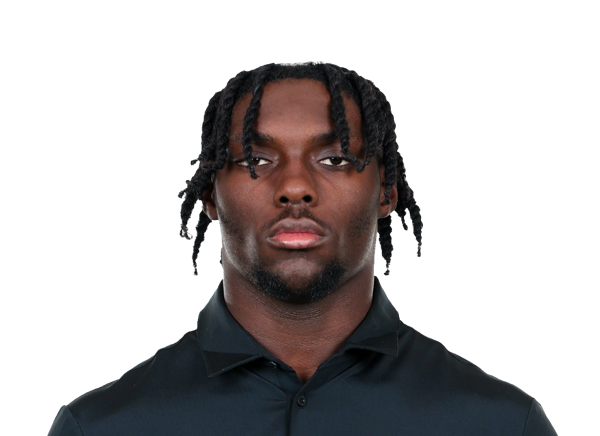
Tank King
 Texas A&M
Freshman
Texas A&M
Freshman
Bio
Recruiting
Scouting Report
Tank King is a 4-star Linebacker from Port Arthur, TX (Port Arthur Memorial) in the 2026 class. Ranked No. 379 nationally, No. 42 at LB, No. 69 in TX. Composite rating: 0.8978. Committed to Texas A&M University since July 3, 2025.
Physical Profile
Listed at 6-0, 205 lbs. Taller than 4% and heavier than 27% of 2026 Linebacker prospects in the SEC Scouts database (207 with a listed size).
Play Style
He's a downhill, first-step-and-go linebacker who plays much faster than his timed speed because he diagnoses early. On film he reads the backfield, trusts his key and fills the run gap aggressively. He's also comfortable scraping over the top when the run goes outside. When he arrives he drops his hips and strikes through the ball carrier rather than reaching and dragging, which is why he both tackles often and misses rarely. In Port Arthur Memorial's defense he played close to the line and was used as a blitzer, and his TFL and sack numbers reflect that. In pass defense he's a spot-dropping zone defender who reads the quarterback and breaks on the ball. Teams have not had to ask him to carry vertical routes, and doing that against SEC tight ends is the next test. Coaches describe him as a leader and communicator: he was a senior captain on a program that went 43-8 over four years, including three straight district titles and a 2025 5A Division I state semifinal.
Strengths
- Elite volume tackler: 456 career tackles (school record), including a 141-tackle, 23-TFL, 3-sack, 2-FF junior season in 12 games. He was leading a top-five 5A defense in tackles at age 14, so the production is sustained, not a one-year spike.
- Instincts against the run and play recognition: he reads plays quickly and triggers downhill without hesitation. The 55 career TFL show he beats blockers to the spot in the backfield instead of making tackles downfield after the ball carrier has already gained yards.
- Striking power relative to his size: evaluators note the 'quick uncoiling power' in his hips on contact. He wraps up and finishes, which film grades as 'sure tackling,' so he rarely lets a ball carrier through for extra yards.
- Sideline-to-sideline range: his redirect quickness and efficient angles let him chase outside runs and screens despite modest track times.
- Pressure package value: 13 career sacks and two blocked punts point to effective timing as an interior blitzer and an immediate special-teams role.
Areas to Improve
- Taking on and shedding blocks at the SEC level: at 6-0, climbing guards weighing 310+ lb will get their hands on him more often than high school linemen did. He needs to develop hand usage, violent stack-and-shed technique and leverage, not just rely on getting to the spot before the blocker.
- Man coverage against tight ends and running backs: 247 credits him with zone-coverage athleticism, but his four career pass breakups and average long speed show that carrying a seam route or matching a flexed tight end is still unproven.
- Diagnosing play-action and run-pass options (RPOs): aggressive, downhill run defenders are the players offenses target with play-action and misdirection. He has to discipline his eyes and hold his gap before triggering.
- Keeping the added weight functional: he went from about 205 to 225 lb. The next 10 lb has to come without losing the redirect quickness that drives his game.
College Projection
Early enrollment in January 2026 gave him spring practice and a head start on strength work, and he has already added weight. He joined a crowded Texas A&M linebacker class, so the realistic 2026 role is special teams (kick coverage and punt units) plus rotational run-down snaps. That also leaves room for a redshirt under the four-game rule. By 2027 he should compete for a two-deep role at WILL or MIKE, and by 2028 he's a legitimate starting candidate in Jay Bateman's defense if his block-shedding develops. His floor is a multi-year special-teams core player and third-down run stopper. His ceiling is a productive two- or three-year SEC starter and tackle leader. I could not verify his 2026 in-season usage at A&M, so this projection rests on his recruiting profile, not on college snaps.
NFL Outlook
He's a Day 3 / priority free-agent profile with upside if he hits his ceiling. NFL teams will flag him for being about 6-0 with ordinary long speed, which usually drops linebackers into the late rounds unless the athletic testing surprises. What gets him drafted is the traits scouts value: instincts, reliable tackling, and play speed that shows up on film more than on the clock. The likely path is a productive SEC starting career (100+ tackle seasons) plus special-teams value, the WILL/special-teams-ace profile that sticks on NFL rosters. For context, his uncle Danny Gorrer went from A&M to a five-year NFL career. A 4.5-range 40 at his pro day would move him meaningfully up draft boards.
Best Fit
Four-man-front defenses that keep linebackers clean and let them run to the ball: 4-2-5 or 4-3 Over looks where defensive tackles occupy the guards and the linebacker reads and fills. That describes Mike Elko and Jay Bateman's Texas A&M defense well, and the in-state fit and family ties to A&M help too. He would be a weaker fit in a two-gap 3-4 that asks inside linebackers to take on climbing guards directly, or in a quarters-heavy scheme that has linebackers matching seam routes man-to-man. His best role is weakside linebacker, or MIKE in a scheme that plays fast with an attacking pressure package, with immediate special-teams value as a four-phase contributor.
Current Team
Texas A&M University