
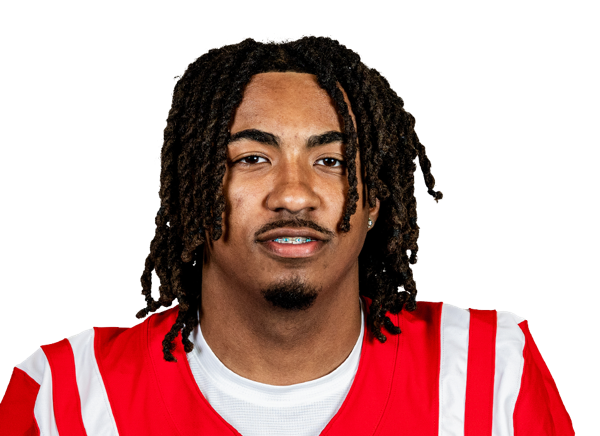
Dorian Barney
 Ole Miss
Freshman
Ole Miss
Freshman
Bio
Recruiting
Scouting Report
Dorian Barney is a 4-star Cornerback from Carrollton, GA (Carrollton) in the 2026 class. Ranked No. 350 nationally, No. 75 at CB, No. 62 in GA. Composite rating: 0.9009. Committed to University of Mississippi since September 27, 2025.
Physical Profile
Listed at 6-1, 180 lbs. Taller than 58% and heavier than 67% of 2026 Cornerback prospects in the SEC Scouts database (204 with a listed size).
Play Style
Projects as a boundary corner who is most comfortable in press-man and Cover 3/quarters structures where he can use length at the line and stay in phase downfield. His interception total points to strong eye discipline and the ability to turn and play the ball rather than just the receiver's hands. He fits cleanly in scheme and is willing to fill against the run and on screens, though his current weight limits how much he can take on blocks. Specific details like release technique, backpedal versus shuffle, and recovery speed could not be confirmed from public film breakdowns.
Strengths
- Ball production: 5 interceptions and 5 pass breakups as a junior (2024) show he finds and finishes the football instead of just being in phase
- Length for press coverage: a 6-1 frame with basketball-bred reach lets him disrupt releases at the line and shrink throwing windows on vertical and back-shoulder throws
- Willing tackler for his size: 39 tackles, 2 TFL and a forced fumble as a junior suggest he will come downhill rather than avoid contact
- Tested against elite competition: Georgia's top classification, and practice work at Carrollton against high-level skill talent (the program that produced QB Julian 'JuJu' Lewis)
Areas to Improve
- Functional strength and mass: needs to add weight without losing fluidity so bigger SEC receivers can't out-muscle him at the catch point, stack him vertically or wash him out in the run game
- Hip transition and short-area quickness against sudden slot-type receivers, a common issue for long corners that has to be proven against college route-runners
- Press technique and discipline: at his length, college refinement will focus on patient feet, landing his hands consistently and avoiding grabby contact past five yards that draws flags
College Projection
Year 1 (2026): mostly special teams and depth, getting reps while he adds strength in the Ole Miss program, with occasional sub-package snaps if injuries hit. Year 2: a realistic push for a rotation role or co-starter at the boundary spot once he is around 185-190. Year 3 and beyond: projects as a multi-year starter if the strength gains show up. Ole Miss has leaned heavily on the transfer portal at corner, so his development timeline will decide whether he beats out veteran additions.
NFL Outlook
Legitimate Day 2-3 draft upside if he fills out. Teams value long corners with proven ball skills, and a 6-1 corner who can play press is scarce. His draft stock depends on reaching about 185-195 pounds while keeping his movement skills, and on posting competitive 40 and short-shuttle times at the combine. His floor is a special-teams contributor and depth corner; his ceiling is a starting boundary corner in a press-heavy defense.
Best Fit
A press-man or match-quarters defense that values length on the boundary and lets its corners compete at the line: Ole Miss's aggressive, pressure-oriented approach under Lane Kiffin fits. A strong strength and conditioning program matters most for his development. He would be less valued in soft-zone, off-coverage schemes that hide his length and put more weight on quick click-and-close from depth.
Current Team
University of Mississippi