
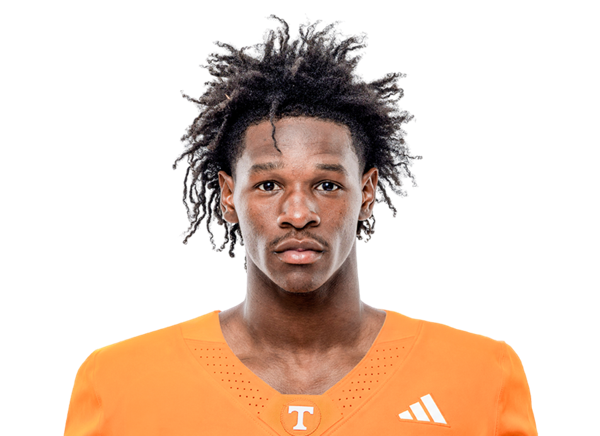
Tyreek King
 Tennessee
Freshman
Tennessee
Freshman
Bio
Recruiting
Scouting Report
Tyreek King is a 4-star Wide Receiver from Knoxville, TN (Knoxville Catholic) in the 2026 class. Ranked No. 131 nationally, No. 21 at WR, No. 5 in TN. Composite rating: 0.9455. Committed to University of Tennessee since October 30, 2024.
Physical Profile
Listed at 5-10, 168 lbs. Taller than 10% and heavier than 20% of 2026 Wide Receiver prospects in the SEC Scouts database (329 with a listed size).
Play Style
King is a vertical slot and space player. At Knox Catholic he lined up mostly inside and was used on seams, go routes out of the slot, crossers and screens, so the offense could get the ball to him in space. He wins with acceleration off the line and speed at the top of his routes more than with physicality. When he gets open he tracks the deep ball well, and after the catch he is decisive: one cut and upfield, not a lot of east-west moves. On special teams he fields punts cleanly and hits seams at full speed. He will not win many 50-50 balls, so his production depends on scheme and matchups.
Strengths
- Game-breaking speed. The 4.39 laser 40 and 21.5 mph max carry over to the field, so he forces safeties to respect him vertically from the slot and turns short catches into big gains. Rivals' Adam Gorney compared his profile to Jaylen Waddle.
- Consistent production. He posted three straight 1,000-yard seasons: about 1,125 yards and 12 TDs as a sophomore, 49 catches for roughly 1,062 yards and 14 TDs as a junior, and 1,085 yards and 11 TDs as a senior. He was the focus of every defense's game plan and still produced every year.
- Return value right away. Josh Heupel has called him a natural punt returner, and he took punt-return reps in fall camp. That is the most direct way for a true freshman with his speed to see the field.
- Run-after-catch ability. He tracks the ball well on crossers, bubbles and quick screens, and he turns upfield without wasted steps. That suits a tempo spread offense built on isolating slot receivers in space.
Areas to Improve
- Play strength and frame. At about 5-11 and the high 170s he needs to add muscle to beat physical nickel corners in press, finish through contact and hold up as a blocker in the run game. The run game matters in Heupel's offense because the slot receivers are expected to block on the perimeter.
- Route detail against SEC coverage. Much of his high school production came from being faster than everyone else in Division II-AAA. He needs sharper breaks on option routes, better reads against zone and better contested catches with his small catch radius. Knox Catholic did not allow early graduation, so he arrived in the summer and missed spring practice, which slowed his learning curve.
College Projection
In 2026 he is a true freshman slot receiver behind 2025 SEC Freshman of the Year Braylon Staley and redshirt freshman Joakim Dodson. He played in the September 5 opener, but his offensive snaps depend on the depth chart and injuries, and punt return is where he is most likely to contribute this year. By 2027, after a full offseason in the strength program, he should compete for a rotation role as the second slot receiver and a designed deep and gadget option. His ceiling is a starting slot receiver by 2028 whose speed stretches defenses and forces them to play two safeties deep. That assumes he adds 10-15 pounds without losing speed and becomes a more precise route runner.
NFL Outlook
His speed alone will get NFL attention: slot receivers and returners who run under 4.4 get drafted if they produce. The Waddle comparison describes his style, not a projection. At about 5-11 and under 180 pounds he would need the size and route polish that Waddle had at Alabama. A realistic range is a Day 2-3 prospect as a slot receiver and returner, and with strong production and a heavier frame he could climb into Day 2. For him, special-teams value makes his NFL path more likely, not less.
Best Fit
An up-tempo spread offense that isolates slot receivers in space and throws vertically from the slot. That describes Heupel's system at Tennessee, which spreads the field wide and attacks deep. He also fits any program that values an immediate punt returner. He would be a poor fit in a pro-style offense that wants big-bodied receivers to block in the run game and win contested catches outside.
Player Comparison
Both prospects share a similar compact, explosive frame at 5'10" 170 lbs with elite state rankings and high 4-star ratings. Waddle was also ranked as a top player in his home state (Texas) and committed early to a powerhouse program, demonstrating the type of elite athleticism and football IQ that translates to immediate impact at the college level despite not having prototypical size.
Current Team
University of Tennessee