
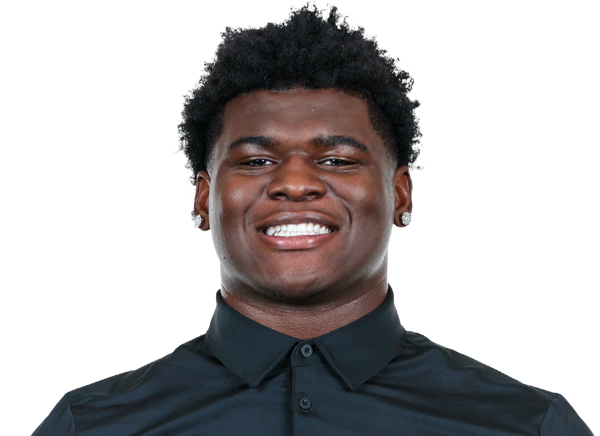
Bryce Perry-Wright
 Texas A&M
Freshman
Texas A&M
Freshman
Bio
Recruiting
Scouting Report
Bryce Perry-Wright is a 4-star Defensive Line from Buford, GA (Buford) in the 2026 class. Ranked No. 66 nationally, No. 19 at DL, No. 18 in GA. Composite rating: 0.9705. Committed to Texas A&M University since July 4, 2025.
Physical Profile
Listed at 6-2, 250 lbs. Taller than 13% and heavier than 10% of 2026 Defensive Line prospects in the SEC Scouts database (227 with a listed size).
Play Style
He is a speed-to-power rusher who wins with his first step and gets upfield right away, working the tackle's outside shoulder and bending under the tackle's hands. He plays low and with nonstop effort, chasing plays from the backside, which explains his high tackle totals. Against the run he is better at slicing gaps and blowing up plays in the backfield than at holding the point of attack. His style fits an attacking front that uses slants and movement, where he is asked to disrupt rather than hold ground.
Strengths
- Elite get-off and first-step quickness: 247 calls him a 'quick-twitched pocket-pusher with impressive get-off.' He beats tackles off the snap before they can set, which is why he generated 27 QB hurries and 7 sacks as a senior on top of 9 sacks as a junior.
- Consistent production against Georgia's top competition: 202 career tackles and 38 TFL at Buford, including 106 tackles and 17 TFL as a senior. For an edge player that tackle total points to real range and pursuit, not just pass-rush snaps.
- Body control and bend: he sinks his hips and flattens to the quarterback without losing balance, and his natural leverage lets him play with a low pad level.
- Scheme versatility: 247 projected him as an active interior lineman who can shoot gaps. That gives A&M a pass-rush-downs option where he rushes from a 3-technique or 4i against slower guards, alongside his main edge role.
- Ball disruption and motor: 3 forced fumbles as a senior and a relentless effort level. He keeps working after the first contact and creates second-effort pressures.
Areas to Improve
- Length and anchor against the run: at 6-2 without proven arm length, he needs a strong long-arm and hand-placement game to keep 320-pound SEC tackles and tight end/tackle double teams off his body. He needs good-weight gains, likely to about 260-265, without losing his twitch.
- Pass-rush plan: many of his high school wins came from simply being faster. He needs a counter sequence (inside spin or swipe off his speed rush, a real power rush) for when college tackles take away the first move.
- Physical maturation: 247's evaluation says plainly that he 'will likely need further physical maturation before he's ready to go.' Strength and conditioning is his fastest route to an every-down role.
College Projection
He enrolled early at Texas A&M in January 2026 and wears No. 16. As a true freshman in 2026 he is a rotational edge rusher behind the established starters, getting pass-rush-down and special-teams snaps; one early-season report credits him with 26 snaps, 1 tackle and 1 PBU, which we have not confirmed. Expect a situational pass-rush role in 2026 and early 2027, a regular spot in the rotation by his redshirt-freshman or sophomore year (2027) once he adds functional weight, and a push for a starting job in 2028. His ceiling is an all-SEC-level third-down rusher.
NFL Outlook
His get-off, bend and production are the traits NFL teams look for. His size (about 6-2, arm length unknown) is the concern, because it points toward a 3-4 OLB or a sub-package rusher rather than a 4-3 base end. If he adds mass and a counter game, he projects as a Day 2 pick in the mold of the undersized, explosive SEC edges who get drafted for their pass-rush win rate. If the length and anchor problems remain, he becomes a Day 3 situational rusher. His college pressure rate and whether he can reach about 260 pounds will decide which.
Best Fit
An aggressive one-gap or multiple front that moves its edge players around, uses a wide-9 or stand-up rush techniques, and uses him inside on passing downs. Texas A&M under Mike Elko fits well: an attacking, disruption-first defense with enough veteran depth up front to develop him through a rotation while he builds his body. He would not fit as well in a two-gap, read-and-react 3-4 that asks its ends to hold blocks.
Player Comparison
Both are elite-ranked prospects from championship high school programs with similar size profiles (6'1", 207 vs 6'1", 250) who demonstrated exceptional versatility and football IQ. Fitzpatrick's ability to impact games at multiple positions, combined with his high character evaluation and leadership qualities from Alabama's program, mirrors Perry-Wright's profile as a top-100 national recruit with championship pedigree and SEC commitment.
Current Team
Texas A&M University