
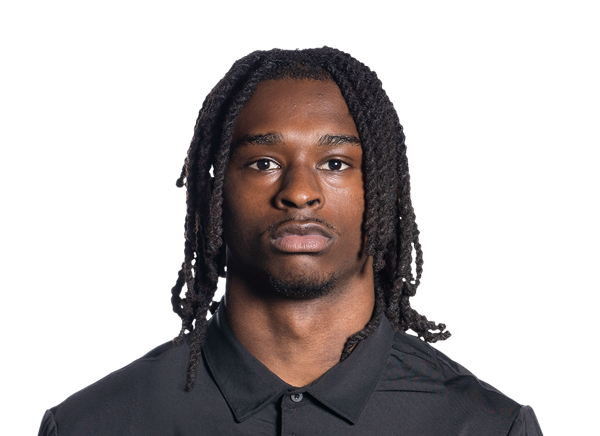
Kelshaun Johnson
 Texas A&M
Sophomore
Texas A&M
Sophomore
Bio
Recruiting
Scouting Report
Kelshaun Johnson is a 4-star Athlete from Hitchcock, TX (Fort Bend Marshall Buffalos) in the 2026 class. Ranked No. 190 nationally, No. 5 at ATH, No. 29 in TX. Composite rating: 89.8971. Committed to Texas A&M University since June 13, 2025.
Physical Profile
Listed at 5-11, 173 lbs. Taller than 17% and heavier than 26% of 2026 Athlete prospects in the SEC Scouts database (150 with a listed size).
Play Style
He plays as a space-and-speed slot receiver. He does his best work on quick game, crossers, bubbles and jet sweeps, where his sudden redirection and burst after the catch turn routine throws into chunk plays. His speed forces safeties to respect him vertically from the slot, and he tracks the deep ball well, a skill carried over from basketball. On film he shows toughness and grit despite his frame, but he wins with quickness and acceleration rather than physicality. He was a three-sport athlete (football, basketball, track) who helped Hitchcock go 35-12 over four seasons with district titles in 2022 and 2024 and earned first-team all-district honors.
Strengths
- Verified long speed: a 10.49 100m school record means he can threaten the vertical third from the slot and turn short catches into long gains. Scouts specifically credited his 'verticality.'
- Run-after-catch creativity: 247Sports' Gabe Brooks cited 'twitchy, creative run-after-catch ability with sudden redirecting explosion,' and A&M coaches compared his playmaking to former Aggie Ainias Smith.
- Short-area quickness and change of direction: evaluators called his change of direction elite and said he consistently 'finds space.' That fits option routes, jet motion and manufactured touches.
- Ball skills beyond his size: his basketball background shows in how he adjusts to the ball, and scouts noted better 50-50 ability and a bigger catch radius than a 5-11, 160-pound frame suggests.
- Inside-outside and return-game versatility: he projected as able to align in the slot or outside, with special-teams value as a returner.
Areas to Improve
- Play strength and frame: even at 173 pounds he needs more functional mass to beat press, finish through contact and hold up as a blocker in the run game.
- Moving up in competition: his production came against 3A defenses, so he needs to refine route detail, stem manipulation and timing against SEC-caliber man coverage. His modest 2025 snaps suggest that polish is still in progress.
- Contested-catch consistency: his catch radius is good for his size, but he needs to finish reliably in traffic over the middle to become a full-time target rather than a gadget player.
College Projection
He appeared in four games as a 2025 true freshman at Texas A&M: 4 receptions for 27 yards, with a long of 25 against Samford. That fits a redshirt-preserving debut year spent adding weight. As a 2026 sophomore wearing No. 11, he is realistically a rotational slot and a return-game candidate while he keeps adding strength. The most likely path is a meaningful slot role in 2026-27, with a potential starting role as a redshirt sophomore or junior if he gets to about 180-185 pounds without losing speed.
NFL Outlook
His NFL profile is a Day 3 or priority free-agent slot receiver and returner, and it depends heavily on college production that hasn't happened yet. His 10.49 100m speed, change of direction and return value match the Tutu Atwell-type archetype the NFL drafts, but his size and limited college output so far mean he needs a breakout year of roughly 40+ catches plus returner value to become a draft prospect. With a strong testing day (a sub-4.40 40 is plausible given his track times), he could rise into the mid-to-late rounds.
Best Fit
A spread or RPO offense that manufactures touches for its slot receiver through jet motion, screens, option routes and vertical seams, and uses him as a returner. Texas A&M's system under Mike Elko, with Holmon Wiggins coaching receivers, fits if the staff schemes him into space rather than asking him to win outside against press. A strength program that can build his frame without costing him speed is critical to reaching his ceiling.
Player Comparison
Williams shares the same 6'5" 230-pound frame and possession-style skill set, excelling as a chain-mover and red zone target rather than a deep threat. Both were highly-rated 4-star recruits who leveraged their size and reliable hands to become consistent intermediate route runners in pro-style offenses.
Season Stats - 2025
Receiving
General
Career History
Texas A&M
#11 WR - Sophomore
Texas A&M
#11 WR - Freshman
Current Team
Texas A&M University