
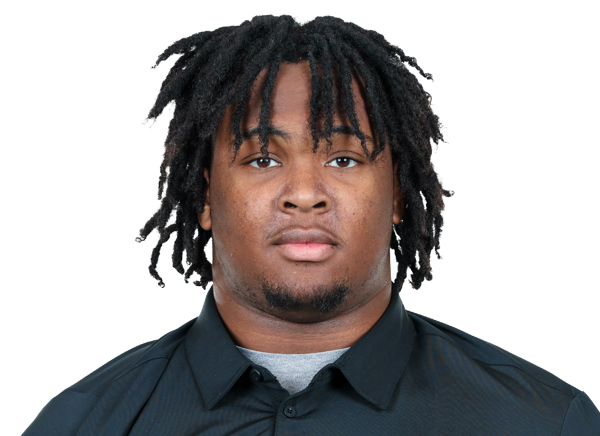
Sam Roseborough
 Texas A&M
Freshman
Texas A&M
Freshman
Bio
Recruiting
Scouting Report
Roseborough is a 6-3, 303-pound blue-chip blocker out of Clearwater (FL) High who signed with Texas A&M in December 2025 and enrolled the following month, choosing the Aggies over a final five of Ohio State, Texas, Florida State and LSU. A 247Sports Composite four-star ranked around No. 130 nationally and No. 7 at interior offensive line, he is a power-based, right-tackle-trained mauler whose body and skill set both point inside at the college level. The value here is a run-game displacer with a two-way defensive background and an unusually short technical resume as a pure blocker.
Physical Profile
The frame has changed materially since his commitment — he was reported between 260 and 285 pounds through the recruiting cycle and is listed at 303 on A&M's roster, meaning he added roughly 20–40 pounds in his first eight months in a college program. At 6-3 he is short-armed and short-statured for the tackle spot he played in high school, and that is precisely why 247's staff projected him inside: the height that caps him at tackle is a leverage advantage at guard, where he can play under defenders' pads instead of reaching around them. Mass is distributed well enough to anchor now, but the 303 number is a checkpoint, not a finish line — conditioning and body composition will determine whether he holds up in a full-speed SEC front. He is also young for the cycle, turning 18 in June 2026, which argues the physical development curve still has runway.
Play Style
He plays angry and finishes. On film he is at his best on down blocks and doubles where he can generate movement off the snap and drive a defender off his spot, creating vertical creases rather than just sealing lanes. He works well in confined spaces — a tight-quarters player who uses his frame to wall off in the A and B gaps — and shows enough range to be functional climbing to a linebacker. In protection he is a set-and-catch blocker rather than a mirror-and-slide one: he wins by absorbing bull rushes and re-anchoring, and gets exposed when asked to gain depth quickly against speed off the edge. The tape is a right tackle's tape, but almost every winning rep is an interior lineman's rep.
Strengths
- Genuine displacement power in the run game — 247's Andrew Ivins explicitly credits him with the 'build, power and tenacity to make a difference in the run game' and the ability to uproot heavy anchors, which is the single hardest trait to teach and the reason he held a top-10 offer sheet including Ohio State, Georgia, Michigan and Alabama.
- Better lateral movement than his mass suggests — he reaches his landmarks on reach blocks and is described as fluid climbing to the second level, which makes him viable in wide-zone and outside-zone concepts rather than being a pure gap-scheme body.
- Two-way defensive experience (51 tackles and 4 sacks in an underclass season, plus 14 tackles and a sack while starting at right tackle as an upperclassman) gives him a defender's understanding of hand placement, get-off and how rushers set up counters — an edge in pass-pro recognition once his technique catches up.
Areas to Improve
- Pass protection footwork is the clear swing skill. The 247 evaluation states plainly that he 'can struggle at times to gain ground quickly enough in pass protection' — his kick-slide does not cover ground on wide rushes, which is both the reason for the interior projection and the thing that will keep him off the field until it improves.
- Rep count as a full-time offensive lineman. Splitting time on defense through high school means fewer true protection reps than most signees at this ranking tier, so pad level consistency, hand timing and stunt/twist passing off are all behind where his physical tools are.
- Weight management at 303 and climbing — the added mass helped his anchor, but he must add it without losing the second-level fluidity that is currently one of his best traits.
College Projection
Guard, not tackle, and A&M has treated him accordingly — he is listed simply as OL at No. 64 and did not crack the 2026 two-deep out of fall camp, with the Aggies' interior competition running through Blake Ivy, Trovon Baugh and Coen Echols behind center Nabou. The January 2026 early enrollment is the meaningful advantage: a spring plus a summer of strength work is why he is already at 303. Realistic timeline is a developmental first year (redshirt or scout-team/special-teams reps), rotational interior snaps in year two, and a starting guard job in year three — which lines up with 247's own 'potential multi-year starter' projection. Center is a possible secondary path given his height and leverage if he shows the snap/recognition aptitude.
NFL Outlook
A legitimate but not automatic Day 3 profile at this stage. The power, finish and youth are draftable traits, and interior linemen who can move bodies in the run game always get looked at. The limiters are structural: 6-3 with modest length means he has no fallback to tackle, so he has to be good enough at guard specifically, and NFL evaluation of guards is increasingly pass-protection-first — exactly his current weakness. If the kick-slide and hand timing come along over three years in an SEC program, mid-round guard is a fair ceiling; if they don't, he profiles as a run-scheme-specific backup. Judgment on him should wait until there is college protection film, of which there is currently none.
Best Fit
A downhill, gap-and-power run offense that lets him fire off and displace rather than asking him to hold up on an island in obvious passing situations — duo, counter and inside zone with pullers. Texas A&M is a reasonable landing spot for that, and the developmental infrastructure plus his early-enrollee head start matter more than scheme purity here. The wrong fit would be a spread-to-pass system that asks its guards to be pass-set-first technicians from year one; the right one is a program with a strength staff that can shape his 303 pounds and an OL coach willing to spend two full years rebuilding his protection footwork from a defender's instincts.
Player Comparison
Similar physical profile at 6'4" 312 lbs with elite athleticism for size, both were highly-rated 4-star prospects who committed early to top SEC programs. Wills also had exceptional composite ratings despite playing multiple positions in high school, showing the versatility and fundamental soundness that translates to elite college programs regardless of final position designation.
Current Team
Texas A&M University