
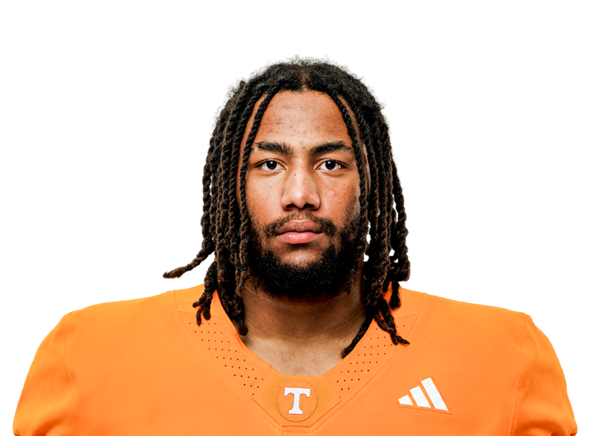
JJ Finch
 Tennessee
Freshman
Tennessee
Freshman
Bio
Recruiting
Scouting Report
Finch is no longer a prospect — he signed with Tennessee on December 3, 2025 after flipping from a six-month Alabama pledge, enrolled in January 2026, and opened the 2026 season on the Vols' two-deep as a rotational interior defensive tackle. He is the son of former Rivals No. 1 national safety Jerimy Finch (Warren Central to Florida to Indiana), and his own senior tape (86 tackles, 24.5 TFL, 10.5 sacks, 17 hurries, Marion County Player of the Year) is a disruption profile, not a volume one. The critical evaluation note is that he has physically become a different player than his recruiting file describes: an edge rusher offered at 6-3/220 as a sophomore who now carries 293-297 pounds and works inside.
Physical Profile
6-3, listed 293 on Tennessee's August 2026 roster and 297 on his current 247Sports profile — up from 260-265 as a senior, 280 at signing, and 220 when Notre Dame first offered him as a sophomore. That is roughly 70 pounds of added mass in under three years, and it moved him out of the position group he was recruited into. The frame absorbed the weight well enough that Tennessee's staff kept him on the interior through spring rather than sliding him back outside, which suggests natural thickness through the hips and lower half rather than soft added weight. At 6-3 he is short-armed by SEC three-technique standards but plays with a functional pad level that taller interior linemen have to work for; the leverage advantage is real and it is the trait most likely to keep him on the field early. The open question is body composition — a player who has gained this fast needs his conditioning staff to hold him near 295 rather than let him drift toward 310, where the burst that made him a 10.5-sack senior would be the first thing to go.
Play Style
High-motor penetrator who plays through the gap rather than reading and reacting. On senior film he attacks a shoulder off the snap, gets skinny through the B-gap and either finishes at the mesh point or forces the ball to move — his 24.5 TFL are heavily concentrated on run stops behind the line and drive-killing pressures, and his 86 tackles from an interior alignment reflect real range chasing plays down the line. He shows a functional swipe-rip to clear hands and enough hip flexibility from his edge and tight end reps to flatten toward the quarterback rather than running an arc past him. What he does not yet show is a snap where he wins by taking on and stacking a blocker; his wins are all displacement wins. He is also a competitor in the finishing sense — the forced fumble, fumble recovery and two pass breakups scattered through his stat line indicate he plays with his eyes up once he has beaten the block.
Strengths
- Genuine backfield disruption, not tackle-count padding: 24.5 tackles for loss and 10.5 sacks with 17 additional quarterback hurries as a senior means he was living on the wrong side of the line of scrimmage on roughly a third of his snaps, and the hurry total shows the pressures kept coming even when he did not finish.
- Pass-rush movement skills carried inside from an edge background — he aligned at defensive end, defensive tackle and tight end at Warren Central, so the first-step quickness and hand usage were developed in space and are now being applied against slower interior blockers. That combination of edge-trained get-off in a 293-pound body is exactly the profile Tennessee's staff flagged in fall camp, with VolQuest reporting the coaches 'really, really high on him' and projecting him to help as a true freshman.
- Developmental runway already banked: he enrolled in January 2026 and took a full spring of SEC reps before fall camp, which is why he is on the opener two-deep at all. High-volume production against Indiana 6A competition on a state-semifinal team also means his tape came against real offensive lines, not a soft schedule.
Areas to Improve
- Anchor and two-gap play strength at the new weight. Every snap of his high school production came from winning early with quickness — he was never asked to hold a point against a double team or reset the line of scrimmage. SEC guard-center combinations will test that immediately, and until he can stalemate one, his snaps stay situational and pass-rush-flavored rather than every-down.
- Interior pass-rush plan. Edge rushers convert to the inside by learning a phone-booth counter tree — long-arm, push-pull, club-swim, and knowing when to convert speed to power — and Finch's tape shows him beating high school linemen before technique was required. He also needs to hold his weight in the 290s; the entire evaluation flips if the burst dulls as he approaches 310.
- Recruiting-board context is honest about the ceiling: he is a 0.8911 composite, roughly No. 469 nationally, No. 96 among defensive linemen and No. 11 in Indiana, and the star rating is service-split (Rivals gave a fourth star, 247's in-house grade of 88 did not). He is a good, not elite, athlete who must win on preparation and leverage.
College Projection
This projection is not speculative — it is already underway. Finch enrolled early, was a fall camp standout by staff account, and appeared as a third-string defensive tackle on Tennessee's season-opening depth chart behind the starters and sophomore Utley, alongside fellow true freshman signee Nuk Simmons in the interior rotation. Expect 10-20 snaps a game in 2026 as a situational interior rusher and run-down spot reliever, with the possibility of a burn-the-redshirt full season if the room stays thin. The realistic curve is rotational contributor as a true freshman, meaningful sub-package role in 2027, and a starting three-technique in 2028 if the anchor develops. His floor is a durable four-year rotational SEC defensive tackle, which is a strong outcome for a mid-400s composite prospect.
NFL Outlook
Too early for a real grade, and the honest read is that his draft case has not started yet — he has no consequential college snaps. The archetype (6-3, 293, sub-optimal length, quickness-first interior player) is one the NFL drafts on Day 3 when the production is there, and the modern one-gap penetrating defenses that dominate the league value his leverage and get-off more than the two-gap era would have. What decides it is the middle of his college career: if he holds 295 and adds a functional counter to a first-step win, he is a late-round three-technique with sub-package value. If the weight drifts and he becomes a pure run-down body without the burst, he is a priority free agent. The bloodline is worth noting for evaluators — his father was a Rivals No. 1 national recruit whose career did not translate, which is a caution against projecting on pedigree rather than a boost.
Best Fit
An attacking, multiple-front defense that asks its interior linemen to shoot gaps and get up the field rather than read-and-react two-gap — which is essentially what he signed into at Tennessee, and why the fit was strong enough to pull him off an Alabama commitment. He needs a defensive line coach with a track record of converting edge bodies to the interior and a strength program willing to cap his weight instead of maximizing it. He is a poor fit for a true 3-4 nose or a heavy two-gap scheme that would ask a 6-3 penetrator to eat blocks for linebackers; that assignment would erase the only trait that made him a 10.5-sack player.
Player Comparison
Similar physical frame at 6'3" 278 lbs suggests a versatile defensive lineman or linebacker hybrid prospect. Ojabo was also a highly-rated recruit who developed early recognition despite being relatively new to football, showing the kind of upside that leads to strong composite ratings. Both prospects demonstrate the athletic potential and early development that major programs target in multi-positional defensive players.
Current Team
University of Tennessee