
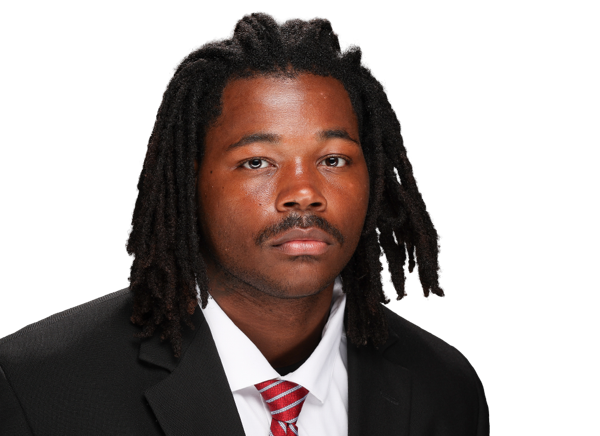
Jared Graham
 Alabama
Freshman
Alabama
Freshman
Bio
Recruiting
Scouting Report
Jared Graham (recruited as Jared Doughty) is a 6-foot-6, 300-pound offensive tackle from Banneker High School in College Park, Georgia, and one of the single fastest risers in the 2026 cycle — a Georgia State commit in June 2025 who decommitted in September after Alabama, Georgia, Ohio State, Auburn, Georgia Tech, Kentucky and Missouri all offered inside a one-month window. He picked Alabama on October 5, 2025 over Georgia, Ohio State, Auburn, Florida State and Kentucky, and is already on campus as a freshman wearing No. 66. The recruitment arc is the evaluation: eight power-conference staffs independently re-graded him in thirty days, which is the strongest possible signal that the tape outran the ranking.
Physical Profile
Legitimate high-major tackle frame — 6-5.5 to 6-6 with a 300-pound playing weight already on him as a high school senior, meaning he arrives without the two-year weight-room runway most tackle prospects need. That is the separator versus the rest of the 2026 tackle group in Georgia: length plus present mass, not one or the other. He carries the 300 well enough to have held up at left tackle against Georgia 5A competition, and the arm length and frame width are what triggered the P4 offer avalanche once evaluators got eyes on him in person. The build profiles as a true right tackle at the college level with a realistic 315-325 ceiling; there is room on the frame, and the fact that Alabama took him as a summer enrollee rather than a January arrival suggests they wanted a full offseason of strength-and-conditioning on him before contact.
Play Style
Power-based, mass-first tackle who wins with size and anchor rather than movement skills. On film he is at his best in a phone-booth — in-line drive blocking, down blocks, and holding the point in pass protection where his length and weight let him stalemate rushers without perfect technique. He plays with a physical, finishing temperament and will bury a defender he gets hands on. The pull-and-reach, second-level, space-blocking part of the game is the least developed portion of his tape; he is not a fluid mover in the open field yet. Because his recruitment turned on in-season fall film rather than spring camp testing, the evaluation is built on live football reps against real opponents rather than shorts-and-shirts drill work — which is generally the more predictive of the two.
Strengths
- Frame and mass are already college-ready — 6-6/300 as a senior is a finished tackle body, not a projection. He does not need to add 40 pounds before he can be functional in an SEC front, which shortens his development window relative to typical 6-6/265 prep tackles.
- Elite trajectory and rate of improvement. Going from a Group of Five commitment in June to offers from Alabama, Georgia and Ohio State by September, then a top-30 national OT ranking by cycle's end, means his tape improved faster than the evaluation industry could re-rank him. Players on that slope are usually still climbing when they arrive on campus.
- Recruited-by consensus is the cleanest external validation available. Alabama, Georgia and Ohio State — three of the most selective offensive line evaluation staffs in the country — all put a scholarship on him within the same month. That is independent, high-cost agreement, not one staff reaching.
- Anchor strength in pass protection is the trait that shows up on the fall film that flipped his recruitment. At his mass and length he absorbs bull rush and resets his feet rather than getting walked back into the pocket.
Areas to Improve
- Technical refinement is the whole developmental project. He was coached at a program that does not produce annual P4 linemen, and the late offer explosion means he had almost no elite camp or 7-on-7-circuit coaching reps before signing. Hand placement, punch timing, and independent hand usage all need to be rebuilt to SEC standard — expect a full year of foundation work before he is trusted in a game.
- Pad level and knee bend at 6-6. Tall tackles with this much natural mass default to catching rushers rather than striking them, and high hips get exposed by SEC speed off the edge. Ankle flexibility and getting his pads down out of his stance are the difference between a right tackle and a move inside to guard.
- Level-of-competition gap. Georgia high school football is deep, but Banneker's weekly opponent slate did not present the caliber of edge rusher he will see on Alabama's practice field, let alone on Saturdays. His first real test against SEC-caliber speed is happening now, in fall camp, and there is no film to say how he handles it.
- Conditioning and playing-weight management. Arriving at 300 is an advantage only if it is functional 300. The summer enrollment window suggests the staff wanted body composition work on him before he took a live rep.
College Projection
True redshirt as a freshman is the expected and correct outcome. He enrolled in summer 2026 rather than January, so he missed spring practice, and he arrives needing technical reconstruction more than physical development. Realistic timeline: redshirt year one on scout team and in the weight room, backup swing tackle by year two, competing for a starting right tackle job in years three and four. The floor here is a multi-year rotational SEC offensive lineman, which is already meaningful value; the ceiling is a multi-year starter at right tackle if the knee bend and hand technique come along. If the pad level does not improve, the fallback is a kick inside to right guard, where his mass plays up and the athletic requirements soften — a common and successful outcome for tall, heavy prep tackles at Alabama.
NFL Outlook
Draftable ceiling, but the range is unusually wide and everything is contingent on technical development that hasn't happened yet. The raw materials — 6-6, 300 pounds, length, natural anchor — are the exact physical baseline NFL teams require at tackle, and players with his frame who add SEC coaching routinely land in the Day 2-3 conversation. His steep improvement curve is the most encouraging indicator: he was still getting better every week of his senior season. The counterweight is that he is technically the rawest of Alabama's 2026 offensive line commitments and has never been coached at a high level. Fair projection: a late Day 2 to Day 3 outcome if he starts two-plus years at right tackle, a priority free agent or Day 3 interior lineman if he moves to guard. Do not expect an early-round evaluation — he needs three years of development before the tape can support one.
Best Fit
A gap/power or duo-based run scheme that asks him to displace defenders vertically rather than reach and climb — which is precisely what Alabama runs, so the fit is right. He needs a program with an established, hands-on offensive line development infrastructure and the roster depth to redshirt him without pressure, because rushing him onto the field in year one would expose the technique gaps against the best edge rushers in the country. Alabama checks both boxes and has a long track record of converting raw, mass-first high school tackles into functional SEC starters. A zone-heavy, movement-based scheme that demands lateral range and second-level climbing would be the worst-case fit and would push him inside to guard much faster.
Current Team
University of Alabama